1726
Jonathan Swift
1667–1745
The Imaginary Knowledge Engine
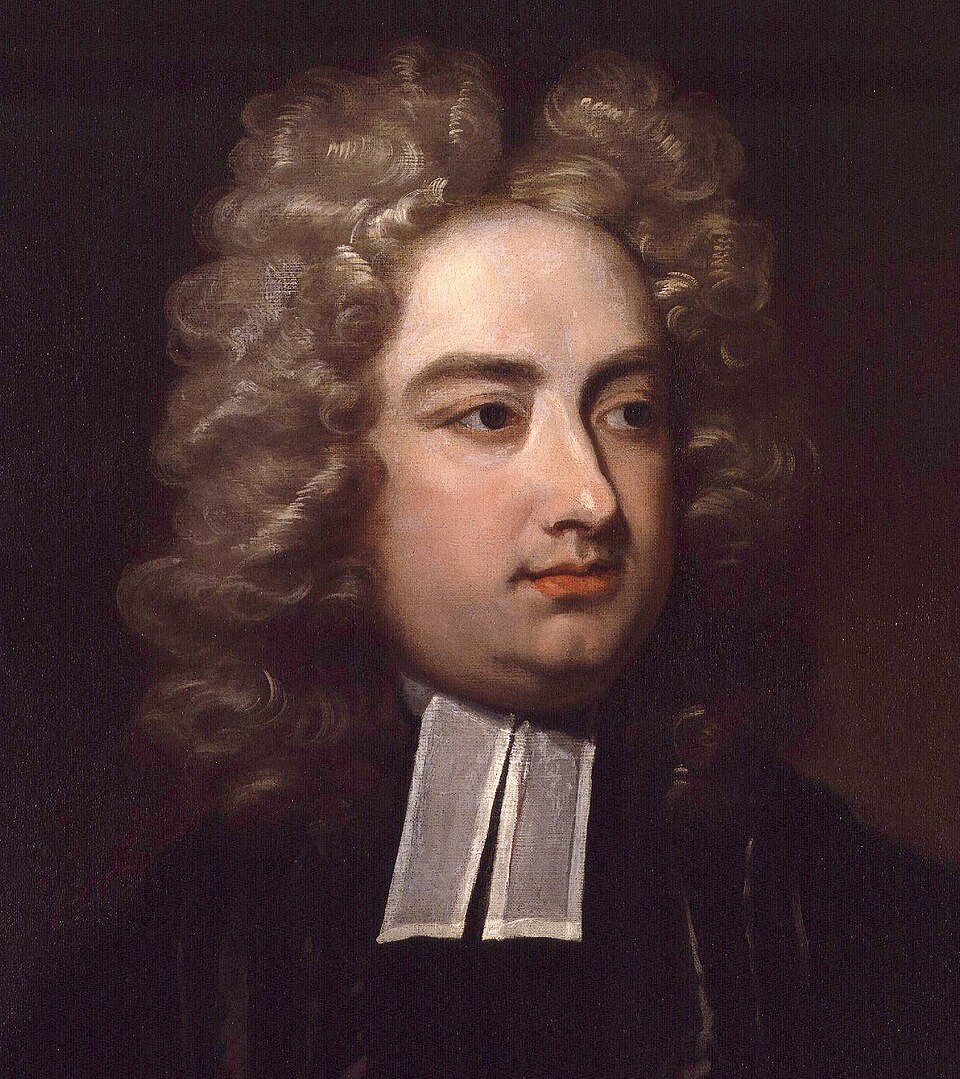
A literary precursor, not an inventor of AI: in Gulliver's Travels Swift imagined a machine that mechanically combined words, satirising the belief that knowledge could be produced without understanding.
In Part III of Gulliver's Travels (1726), Gulliver visits the Academy of Lagado, where a professor demonstrates a frame of wooden blocks bearing words. Turning its handles shuffles the words, and students copy down any fragments that read like sentences, hoping to compile books on philosophy, politics and mathematics without study or genius.
Swift's contribution was fictional and satirical, so the connection to AI is conceptual rather than a direct technical lineage. Even so, his question of whether mechanical recombination of language can produce genuine knowledge remains strikingly relevant to today's generative AI, and makes his satire an early example of AI criticism.
Dated contributions
1726
The Imaginary Knowledge Engine
Jonathan Swift
A literary precursor, not an inventor of AI: in Gulliver's Travels Swift imagined a machine that mechanically combined words, satirising the belief that knowledge could be produced without understanding.
Book · 1726 — Gulliver's Travels, Part III, Chapter V (the Lagado engine) ↗